Search
Challenge assumptions. Build inclusive practice.
Every one of us has unconscious bias. It shapes how we think, make decisions and interact with others, often without us even realising it.
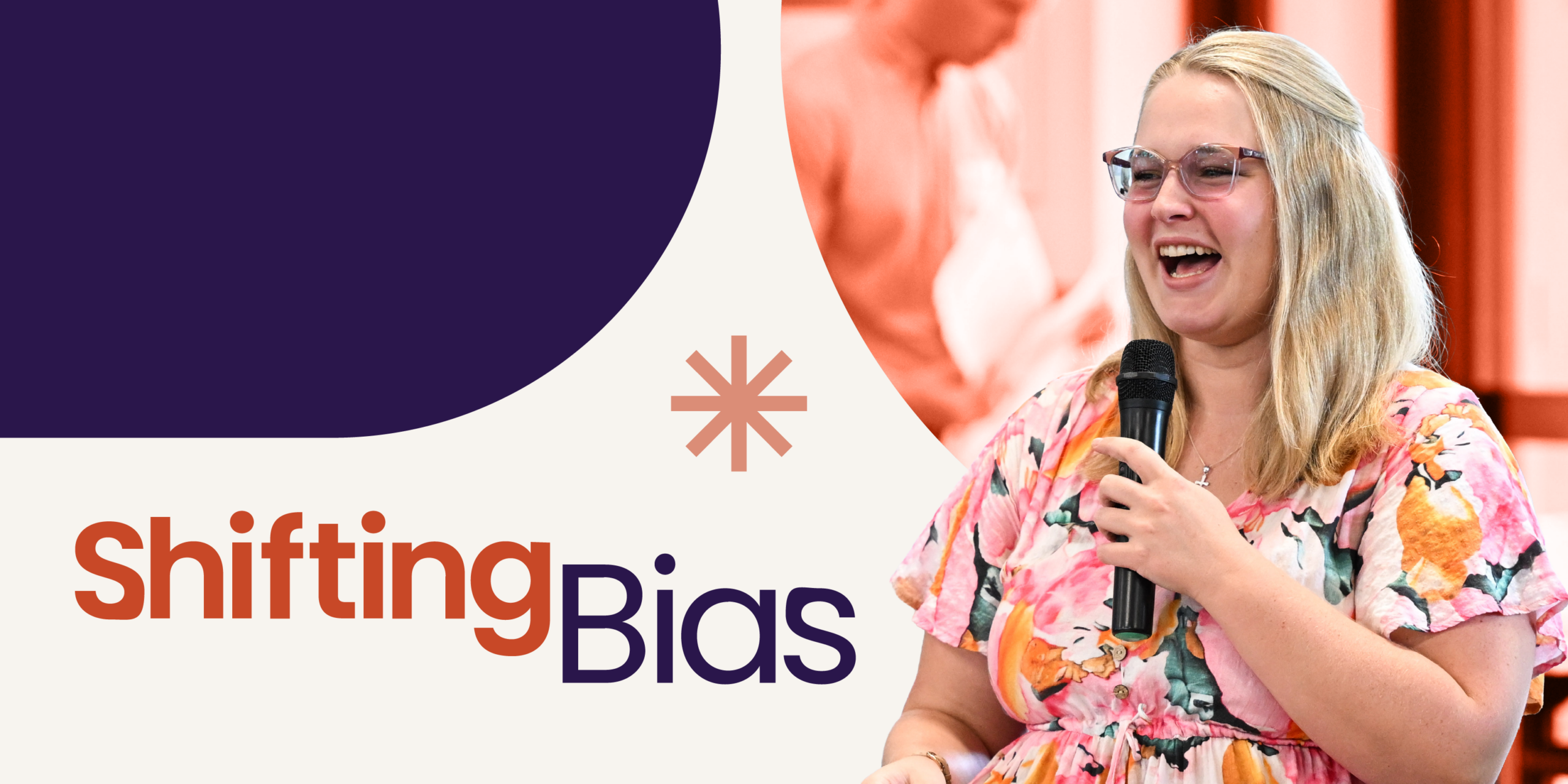
Shifting Bias is a free, interactive workshop that has been designed by people with disability in partnership with community service and justice sector leaders.
This workshop will help organisations recognise unconscious bias, understand its impact on people with disability, and develop practical strategies to create more inclusive services, workplaces and communities.
Delivered by people with disability, this training combines lived experience with practical tools that attendees can apply immediately in their everyday work.
Tailored for community services and the justice sector.
Register your organisation for a Shifting Bias workshop today.
Why Shifting Bias?
Creating inclusive services starts with understanding the barriers people face. It is not just physical barriers, but the attitudes, assumptions and systems that influence everyday experiences.
This free, interactive workshop provides a safe, engaging space to explore unconscious bias, challenge common stereotypes, and build the confidence to make more inclusive decisions.
Rather than focusing on blame, Shifting Bias empowers participants to recognise bias, reflect on their own practice, and take meaningful action.
What you'll learn
During this workshop, participants will:
- Understand unconscious bias and how it affects people with disability, workplace culture and organisational systems
- Explore disability beyond assumptions, stereotypes and misconceptions
- Reflect on personal attitudes, influences and decision-making practices
- Learn practical strategies to recognise and reduce bias in everyday interactions
- Apply inclusive approaches that improve experiences for people with disability.
Outcomes for your organisation
After completing Shifting Bias, your team will be better equipped to:
- Recognise and address unconscious bias with confidence
- Understand how organisational practices can unintentionally create barriers
- Build more inclusive services and workplaces
- Improve communication, decision-making and customer experiences
- Create lasting, positive change for the people you support.
Delivered by people with disability
The most powerful learning comes from lived experience.
Shifting Bias is facilitated by trainers with disability who bring authentic perspectives, practical insights and real-world examples that challenge assumptions and inspire meaningful change.
Participants leave with a deeper understanding of inclusion and practical actions they can put into practice immediately.
Who is this workshop for?
Shifting Bias is tailored for people in who work in the justice sector or community services.
Register your organisation
Ready to create a more inclusive workplace?
Book a Shifting Bias workshop for your organisation and equip your team with the knowledge, confidence and practical tools to recognise bias and foster meaningful inclusion.
Register your organisation today to organise a training session.
Read below what workers in the Justice sector said about the workshop
- “(The facilitators) did a fantastic job drawing on their own life experiences to make the session authentic and impactful”.
- “The staff group were really engaged, and it’s set up some important conversations/spaces for us to reflect on how we can make sure our work is more accessible, more inclusive, and more strengths-based”.
- “The team appreciated that the facilitators used personal examples and anecdotes throughout the session, which helped create a safe and authentic learning environment”.
- “The session was well pitched, well-paced, and delivered in a very human way, with no sense of shame or judgement“.
- “A number of team members commented that the session felt more like a group discussion than traditional training, which they saw as a strength”.
- “Seeing personal examples (of bias) openly discussed and explored without judgement made (staff) feel more comfortable sharing their own reflections“.
This activity is supported by funding from the Australian Government Department of Health, Disability and Ageing under the Inclusion and Accessibility Fund.